Times Square
2003
Giuseppe Lignano, Ada Tolla, and Mark Robbins
Times Square accommodates tourists and natives, two populations whose uses of the space often overlap and diverge. For many, the crowds and space are the event.
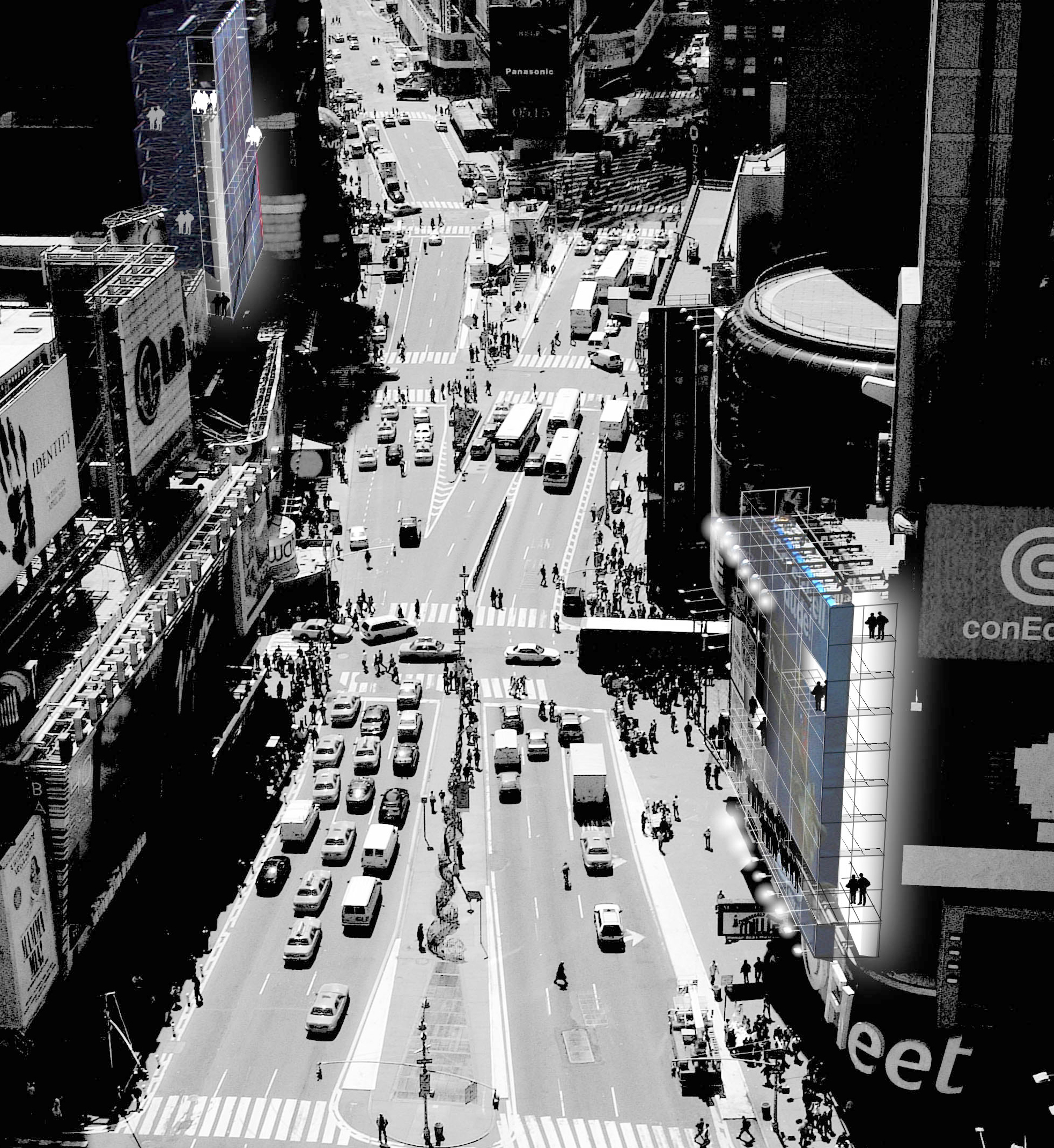
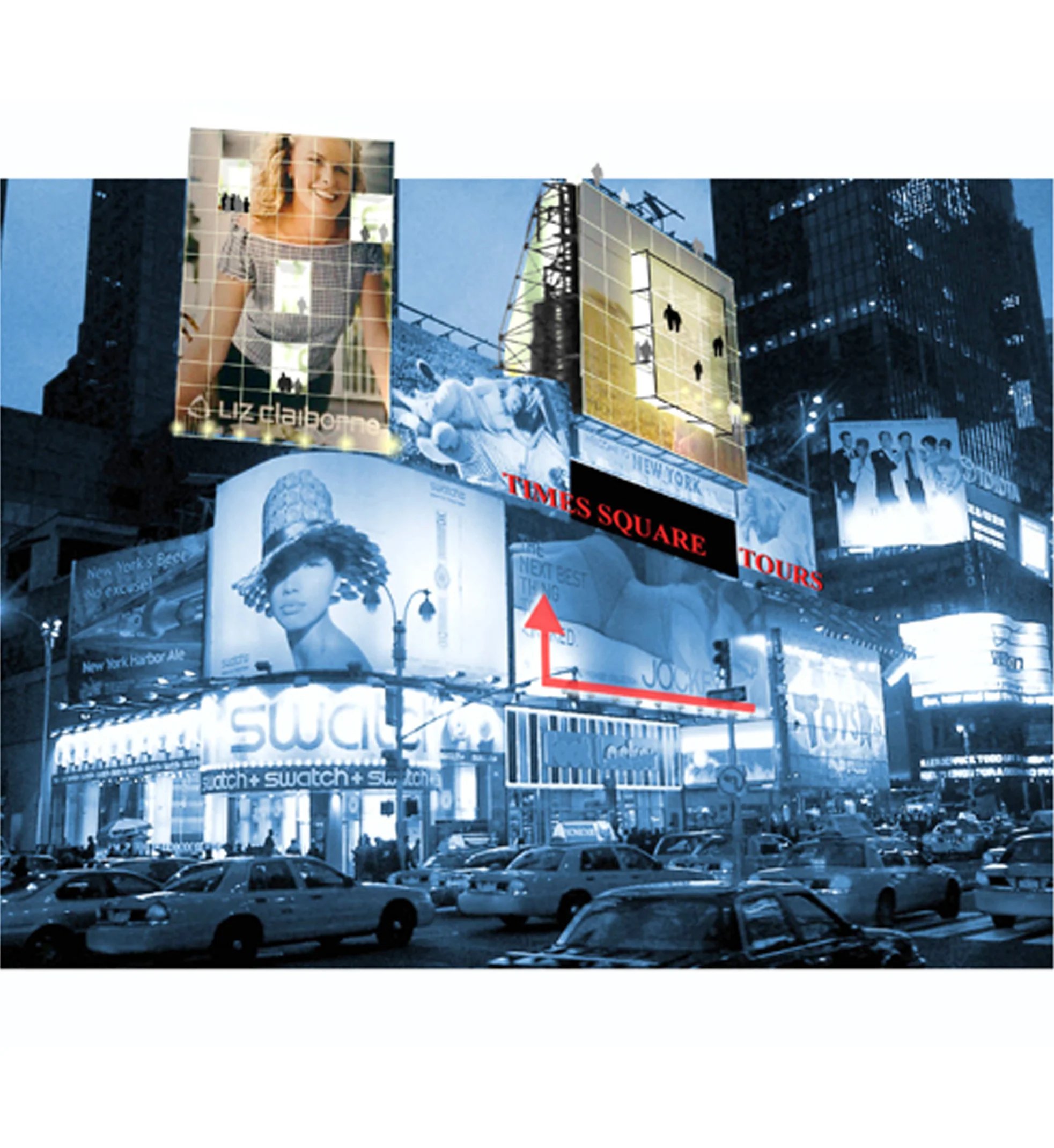
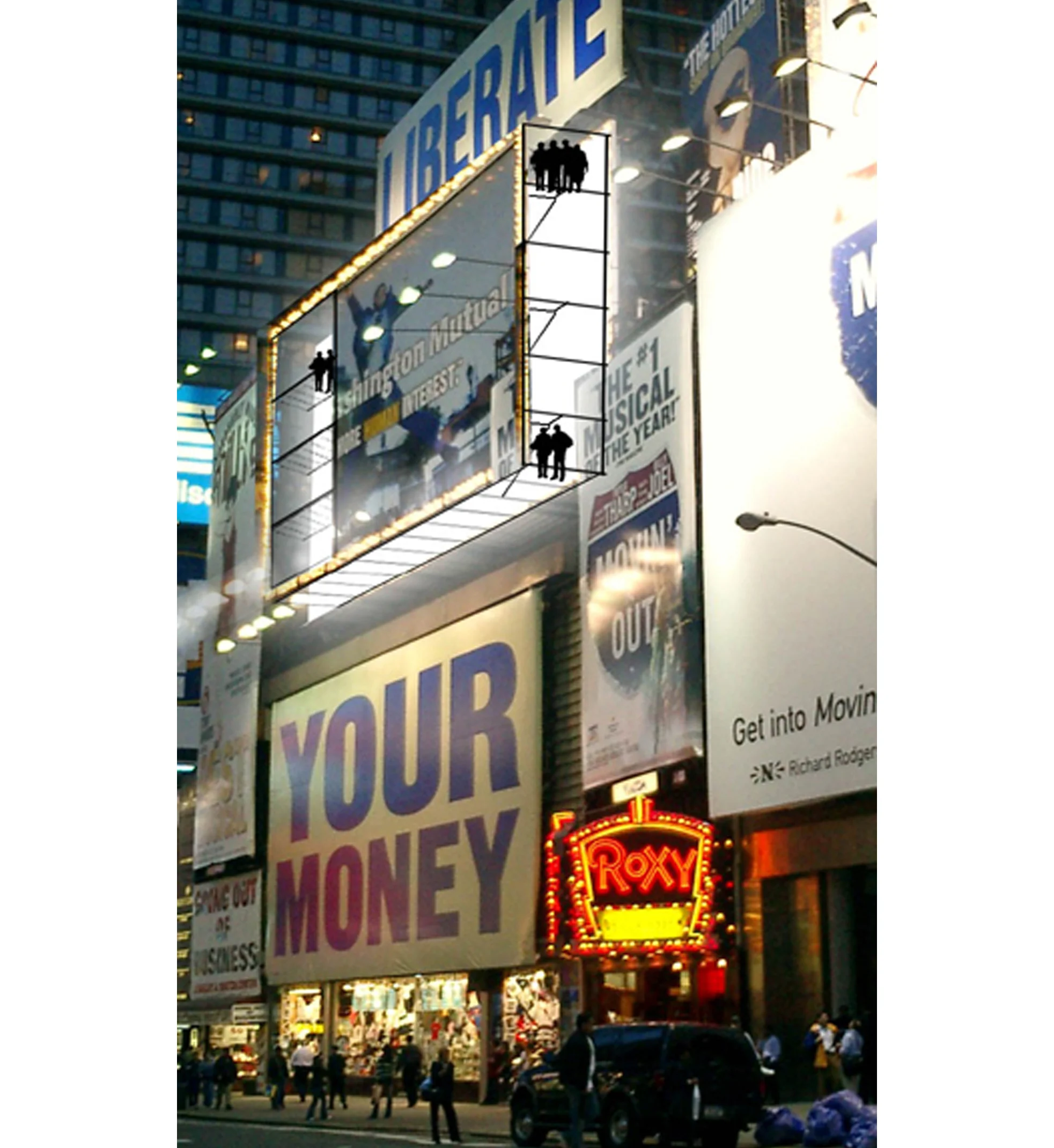
Elevated catwalks would provide access above the street and — like Fred Astaire dancing up the walls —up the sides of the buildings, inhabiting the spaces behind the billboards. The proposal of secondary level of pathways would enhance the passage and allow stopping to view the Square. It would afford multiple and varied vantage points and could be variously programmed, changing to accommodate larger crowds and the everyday viewing of daily traffic in the square.
The project has two sets of components, one horizontal the other vertical:
1. An elevated series of paths allow for passage above the bowtie of intersecting avenues, connecting with side streets, as well as the raised portion of the new TKTS booth and the subway system below. This new layer of circulation has flexible components that can adjust to specific events, such a collapsible stage and bleachers.
2. Activated billboards provide views and amenities such as comfort stations, lunchtime perches above the street and visitor orientation not unlike Berlin’s Infobox. They also provide balconies and box seats for spectacles and platforms for politicians at civic events. These suspended rooms are also elevated media staging areas for film and TV camera crews to record the life below.